
Some adapters can be switched between 3.3V and 5V for the data pins, but still provide 5V on the power pin which will irreparably destroy your device. You MUST make sure the data (RX and TX) and VCC pins are set for 3.3V. The power supplied to the device is one of the most important elements for both flashing the device and for stable operation. You must ensure that the device receives sufficient power (current AND appropriate voltage level) to properly flash the firmware on the device. This should be the .bin file you downloaded in the previous section. When you receive the email, you will notice that there are two .bin files that you can download, one for float and one for integer. The modules that are selected by default make up the ‘basic’ version of the firmware, which should run on all ESP devices.
- The rest of the features are exactly the same with Espressif’s firmware.
- That’s where a configuration file called a “linker script” comes in.
- To obtain the stock boot.img file, you must extract the Samsung stock ROM file.
- When you open BlackBerry Desktop Manager, the software searches for the policy.bin file to make any policy changes to the software and any connected BlackBerry devices.
- Some devices and applications still use BIN files for firmware updates, but that’s about where the usage ends for the common user.
SVD-Loader from Leveldown Security is a Ghidra plugin to automate the creation of memory segments and peripherals for bare metal ARM firmware. The plugin parses SVD files and automatically creates the memory segments. SVD field for various ARM platforms can be obtained from the cmsis-svd GitHub repository. Let us re-import the file once again in Ghidra but specifying the correct base address this time. The base address can be specified by clicking the options button in the import dialog.
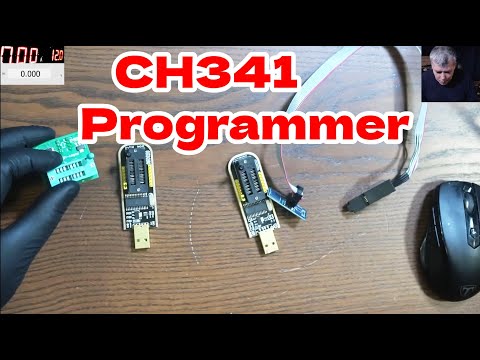
If you have followed Hardware preparation, your device should be in Programming Mode and ready for a Tasmota firmware binary to be installed. At this stage you should now have a binary file (.bin) ready to flash to your device. You should also have your device connected to the USB port, either directly or with an adapter. From the espressif firmware you just downloaded you will need to load 4 seperate files to the ESP8266 chip. The easiest way to determine the flash capacity is to load the firmware and then print(node.info’hw’.flash_size) which reports the flash size in Kb.
For each MOTHERBOARD there are one or more PlatformIO environments that tell PlatformIO how to build the firmware for it. In Marlin we keep track of these environments using comments in the file pins.h (located at Marlin/src/pins/pins.h since Marlin 2.0). To set the build environment for your board, open the file platformio.ini and change default_envs to the environment that your board uses. You may need to change the stepper drivers (_DRIVER_TYPE) and serial ports (SERIAL_PORT).
Since the first thing I did when I got my hands on it was to flash OpenWRT, I got kinda curious what the firmware contains and how old the Linux kernel is if it runs Linux. These capable cameras should be solid and well-built, have both the speed and focus to capture fast action and offer professional-level image quality. In this buying guide we’ve rounded up all the current interchangeable lens cameras costing around $2000 and recommended the best. Software is written in so called computer languages, but they are translated by a program called a compiler to machine executable code. Although, in most cases, the firmware will start with a bootloader image or a https://aelyapi.com/effortlessly-upgrade-your-samsung-galaxy-s4-sgh/ blank section.